
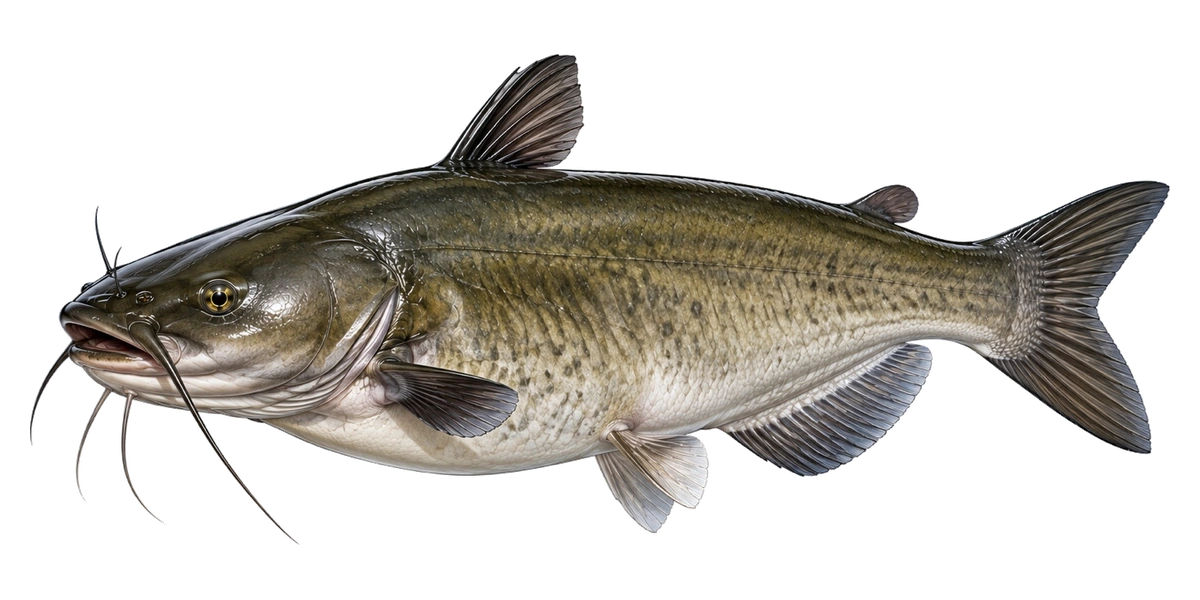
Channel Catfish Fishing at Orange Lake
Ictalurus punctatusIctaluridae · Generalist sport catfish and bottom-oriented predator
Channel catfish are versatile sport fish that use smell, taste and touch extremely well, especially in dark or turbid water. They feed on fish, crayfish, insects, mollusks and other natural foods, and they can be caught from channels, flats, wood, undercut banks and other productive bottom habitat.
Start with the clues that concentrate fish
Look here
Channel catfish are not locked to one depth or one type of structure. Look for places where food, current or bottom cover give them a reason to travel, feed or hold.
Follow the food
Channel catfish are broad generalists. Fresh, locally relevant food is usually a stronger biological clue than assuming the strongest or foulest odor must be best.
How to fish for them
Use natural baits, worms, cut bait where legal, or prepared baits around channel edges, flats and bottom cover.
Position bait where current can carry scent through a likely travel lane, current break or feeding zone.
Drift baits across channel-to-flat transitions or other broad feeding areas when fish are spread out.
Give nighttime and other low-light periods extra attention, but do not assume channel catfish stop feeding during daylight.
Water movement affects how food and scent travel. Current breaks and downstream scent paths can matter as much as the structure itself.
Edges between deeper travel water and productive feeding flats can create repeatable movement and feeding routes.
Logs, undercuts, rock gaps and other protected spaces can provide both cover and spawning habitat.
Channel catfish are well equipped to feed in stained water because chemical senses supplement vision.
Fish, crayfish, insects and mollusks are all legitimate natural foods. Match the lake's actual food supply instead of relying on one universal bait.
Fast facts worth remembering
- Scientific identity
- Ictalurus punctatus
- Family
- Ictaluridae — North American catfishes
- Feeding toolkit
- Taste, smell, touch and vision
- Main foods
- Fish, crayfish, insects, mollusks and other natural foods
- Tail
- Deeply forked
- Identification clue
- Anal fin is shorter and more rounded than a Blue Catfish
Facts that change how you think on the water
Scent is information, not magic
Channel catfish use highly developed chemical senses to locate food, especially where visibility is limited.
They are active feeders, not just scavengers
Channel catfish eat live animal prey including fish, crayfish, aquatic insects and mollusks in addition to opportunistic foods.
Turbid water does not shut down feeding
Their taste and smell systems allow channel catfish to continue locating food when vision is reduced.
Channel and Blue Catfish can look similar
Both species have forked tails, and large Channel Catfish may lose the dark spotting often used as an identification shortcut.
A seasonal behavior, not a magic temperature
Channel catfish spawn in late spring and summer in secluded cavities such as undercut banks, hollow logs, rock gaps and other protected spaces. Males guard the nest and brood.
Fishing use: During the spawning period, add cavity-rich wood, undercuts and protected rock to the search instead of using a generic shallow-water rule.
Keep in mind: Spawning temperature is a reproductive clue, not a universal feeding optimum or exact seasonal depth.
Three facts that stick
Channel catfish use sensory tissue on the barbels and body to detect chemical food cues in the surrounding water.
Large Channel Catfish may lose the dark body spots that are common on smaller fish.
After spawning in a protected cavity, the male remains associated with the nest and developing young.
Think food trail, travel lane and bottom transition.
Channel catfish are adaptable feeders. Find where natural food, current and bottom structure come together, then put a fresh or scent-producing bait where the fish can encounter it.