
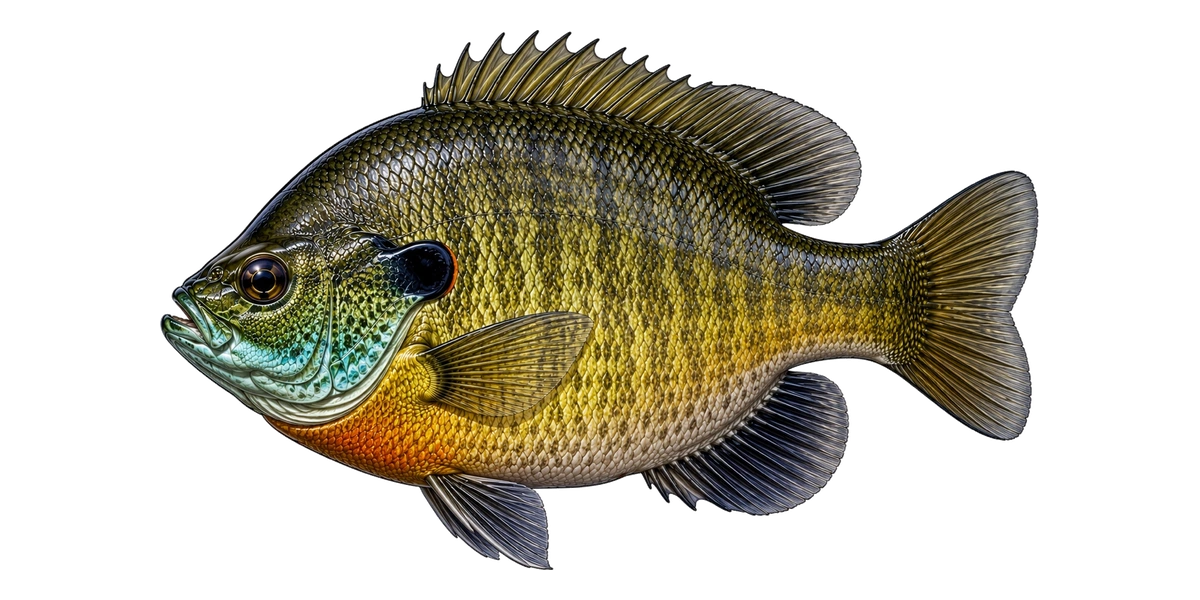
Bluegill
Lepomis macrochirusCentrarchidae · Sport panfish and important freshwater forage
Bluegill deserve to be treated as sport fish in their own right. They are aggressive, structure-oriented sunfish that feed heavily on insects and small aquatic prey, form dense spawning colonies, and can produce excellent light-tackle fishing. They are also important forage in many freshwater systems, so learning where bluegill concentrate can help explain where larger predators may hunt.
Bluegill Records
Official state records and IGFA current All-Tackle world records. These are not necessarily Lake Fork catches.
Start with the clues that concentrate fish
Look here
Bluegill can be very shallow when feeding or spawning, but larger fish do not have to stay on the bank. If a shallow group disappears, check nearby shade, vegetation edges and the first deeper water.
Follow the food
Bluegill have relatively small mouths and feed heavily on small prey. Match presentation size to what the fish can efficiently eat instead of simply downsizing a bass lure a little.
How to fish for them
Use small worms, insect larvae or other legal small natural baits around vegetation, docks, shade and spawning areas.
Use small jigs, micro-plastics and tiny suspended or moving presentations that fit the bluegill's small mouth.
Small flies and insect imitations can be effective when bluegill are feeding on surface or near-surface insects.
Look beyond the most obvious shallow fish. Nearby shade, vegetation edges and slightly deeper water can hold larger bluegill, especially outside active spawning periods.
Bluegill are colonial nesters. One visible dish-shaped nest can be a clue that many more nests occupy the same suitable flat.
Surface insects and aquatic insect activity can pull bluegill shallow and make tiny natural-looking presentations especially relevant.
Docks, overhanging cover and vegetation can provide both food-rich edges and relief from bright light.
Healthy vegetation creates feeding edges, cover and concentrations of small invertebrates that bluegill use.
When shallow activity fades, the first usable deeper water or shaded edge can be more important than abandoning the area completely.
A few facts that help on the water
One bed can mean a whole neighborhood
Bluegill commonly build nests in colonies, with many males using suitable shallow substrate close together.
Small mouth, broad menu
Bluegill feed heavily on insects and small aquatic invertebrates but can also take crustaceans, mollusks, fish eggs and small fish when size and opportunity allow.
Use bluegill to read the predators
Bluegill location is useful even when bluegill are not your target. Where they gather, feed, spawn or move between cover and deeper water can reveal where predators have access to a concentrated prey source.
Beds create a prey concentration
A spawning colony concentrates many adult bluegill in a relatively small shallow area.
Vegetation and docks can hold both prey and ambush cover
Bluegill commonly use vegetation, docks, wood and shade because these areas provide cover and food.
A disappearing shallow group is still information
Bluegill can shift from shallow feeding areas toward shade or deeper water as conditions change.
Match predator lures to the real prey shape
Bluegill are deep-bodied sunfish, not slender shad.
Keep in mind: Bluegill presence does not prove a predator is feeding on them at that moment. Treat bluegill as forage evidence, then verify predator presence with bites, electronics, visible activity or other lake-specific clues.
Catch the bluegill. Read the food web.
Bluegill are fun sport fish, but they also tell you where prey is concentrated. Learn their beds, vegetation edges, shade and movement routes, and you gain useful information for both panfishing and predator fishing.