
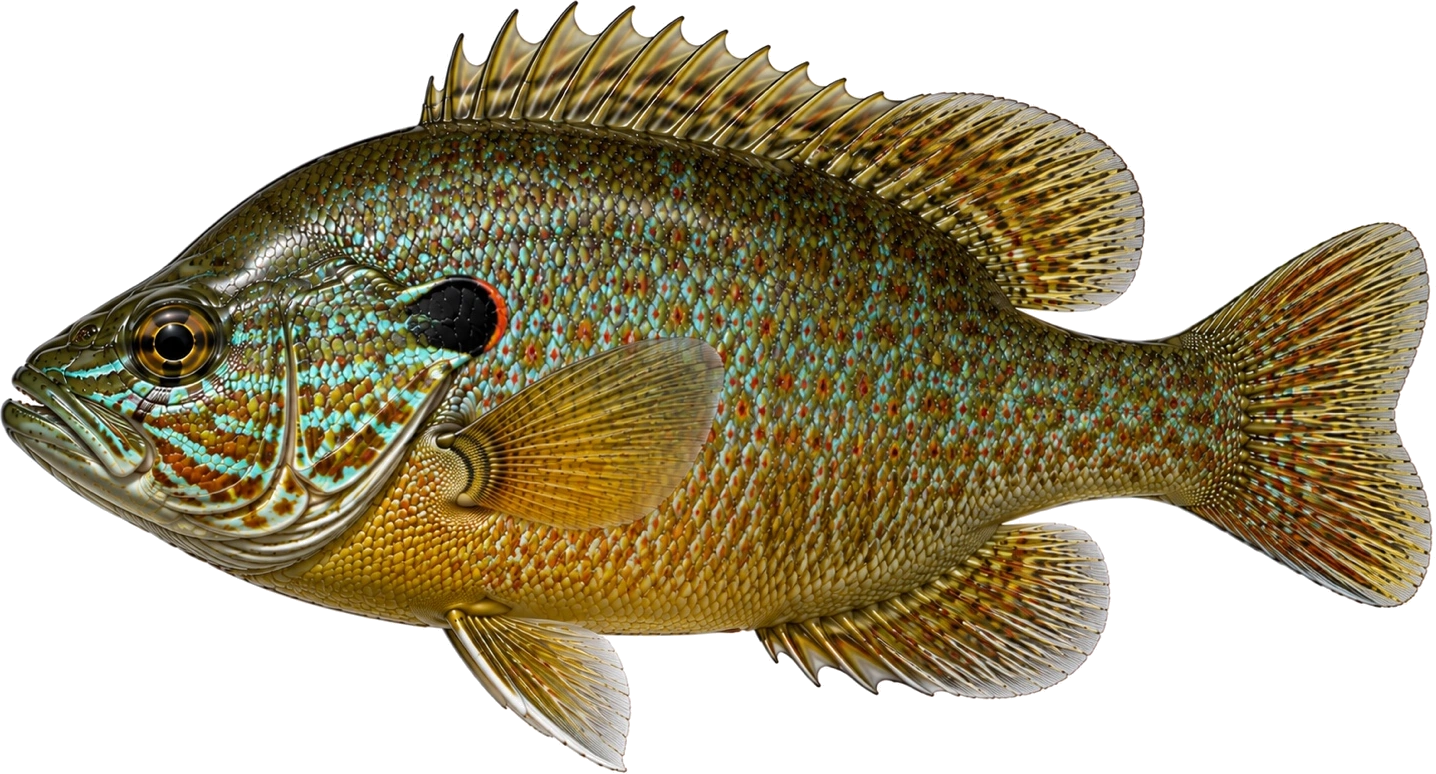
Redbreast Sunfish Fishing at Lake Norman
Lepomis auritusCentrarchidae · River-oriented sport sunfish and panfish
Redbreast sunfish are hard-fighting light-tackle fish strongly associated with streams, rivers and upstream reservoir habitat. They use pools, backwaters, wood, undercut banks, riprap and rocky shorelines, and their diet makes current-carried and shoreline insects especially important clues.
Start with the clues that concentrate fish
Look here
Redbreast are not simply Bluegill with a red belly. Favor riverine or current-influenced habitat, especially places where slower feeding water sits beside current, wood or rock.
Follow the food
Insects are a major part of the diet, including food that falls or drifts from shoreline vegetation. Crayfish and other bottom prey become especially relevant around rock and wood.
How to fish for them
Use small flies, insect imitations or legal natural baits around current seams, shaded banks and places where terrestrial insects enter the water.
Small jigs and compact soft plastics work around wood, riprap, pools and rocky shoreline structure.
Use small crayfish- or invertebrate-style presentations around riprap and rocky points where those foods are available.
Fish the softer side of current: seams, pools, eddies, undercuts and protected pockets where a sunfish can feed without fighting maximum flow.
The boundary between moving and slower water can deliver food while giving fish an efficient holding position.
Shade and terrestrial insects can make wooded banks and overhangs productive feeding zones.
Stumps, debris and eroded banks create protected holding water beside feeding routes.
Rock provides current breaks and habitat for crayfish and aquatic insects.
Redbreast generally fit flowing or well-circulated habitat better than stagnant, heavily vegetated pockets.
Fast facts worth remembering
- Scientific identity
- Lepomis auritus
- Family
- Centrarchidae — the sunfish family
- Best ID clue
- Long, narrow dark opercular flap
- Main foods
- Insects, crayfish, mollusks and small fish
- Habitat identity
- Streams, rivers and upstream reservoir reaches
- Spawning
- Male builds and guards a shallow nest
Facts that change how you think on the water
This is a river sunfish
Redbreast strongly use stream and river pools, backwaters and upstream reservoir reaches rather than behaving like a generic open-lake panfish.
Food can fall from above
Terrestrial insects are part of the Redbreast diet along with aquatic insects.
Current delivers food but costs energy
Redbreast use river habitat but commonly hold around pools, backwaters, cover and current breaks rather than maximum flow.
Color alone is a bad ID system
Male belly color intensifies during breeding, while the elongated dark opercular flap is a more dependable identification feature.
A seasonal behavior, not a magic temperature
Male Redbreast Sunfish build shallow saucer-shaped nests on sand or gravel and guard the eggs and young. Nests may be solitary or occur near other nests.
Fishing use: During the spawning period, add protected shallow sand and gravel near river or upstream-reservoir cover to the search.
Keep in mind: Spawning temperature is a reproductive clue, not a universal feeding optimum, and timing changes by drainage, elevation and weather.
Three facts that stick
The long, narrow dark opercular flap is a stronger identification clue than belly color alone.
Terrestrial insects are part of the diet, connecting shoreline vegetation directly to fishing opportunity.
Redbreast commonly thrive in river pools, backwaters and upstream reservoir habitat rather than stagnant weed-filled water.
Fish the soft water beside the food conveyor.
For Redbreast, current can deliver insects and other prey, while wood, rock, pools and undercuts provide efficient places to hold. Look for the intersection of moving food and protected water.