
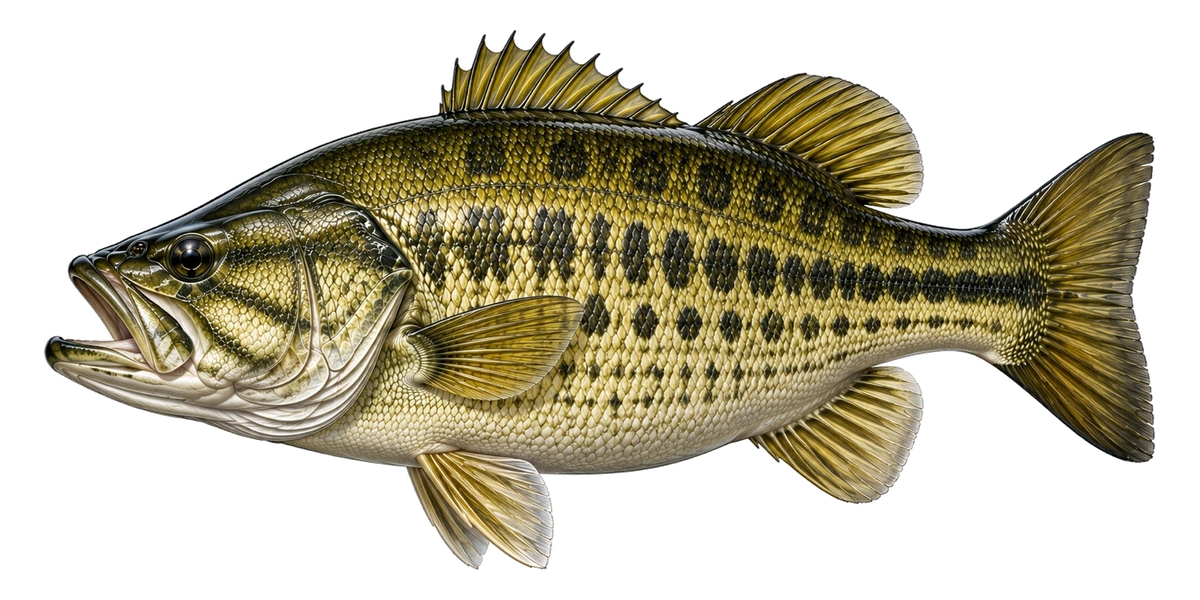
Spotted Bass Fishing at Lake Guntersville
Micropterus punctulatusCentrarchidae · Reservoir and river black-bass sport predator
Spotted bass are black bass that often combine a strong connection to rock, gravel, clay and channel structure with a willingness to follow shad and other forage offshore. They can resemble largemouth bass, but their habitat use and feeding behavior often reward anglers who search both the bottom and the open water around structure.
Start with the clues that concentrate fish
Look here
Do not assume spotted bass must be tight to the bank. A productive point or channel edge may matter because it connects bottom structure to moving forage, not because the fish are touching the rocks.
Follow the food
Spotted bass can feed heavily on bottom-oriented prey such as crayfish and also chase pelagic forage. Let the dominant food source decide whether you stay on the bottom or follow bait into open water.
How to fish for them
Use jigs, soft plastics and other bottom-oriented presentations that imitate crayfish or small prey around points, rock and channel transitions.
Use small to medium baitfish imitations when spotted bass are feeding on suspended or moving forage.
Use moving baits or bottom-contact presentations to cover the transition from shallow structure into deeper water.
Use sonar to find suspended forage and fish, then present at the same depth instead of forcing every spotted bass onto the bottom.
Rock, gravel and clay can support crayfish and create feeding habitat that spotted bass use throughout much of the year.
Points, humps and other structure become more useful when they connect directly to channel edges or deeper travel water.
Spotted bass can leave obvious shoreline cover and follow shad or other pelagic prey into open water.
Shallow gravel and clay become more important as males build and guard nests during the spawning period.
True Spotted Bass are Micropterus punctulatus. Alabama Bass are a separate species, so lake-specific identification matters before applying this card.
Fast facts worth remembering
- Scientific identity
- Micropterus punctulatus
- Family
- Centrarchidae — the sunfish family
- Key forage
- Crayfish, insects and fish including shad
- Habitat tendency
- Rock, gravel, clay, points and channel-related structure
- Identification clue
- Jaw usually ends near the rear edge of the eye
- Taxonomy warning
- Alabama Bass is a separate species
Facts that change how you think on the water
They can feed both down and out
Spotted bass eat crayfish, aquatic insects and fish. That gives them both a bottom-oriented feeding pathway and an open-water baitfish pathway.
A point can be useful for two different reasons
Spotted bass commonly use points and channel-related structure, but those same places can also intersect moving forage in the water column.
They are not just shoreline bass
Reservoir spotted bass can use offshore structure and open-water forage zones rather than remaining tied to bank cover.
Spotted Bass and Alabama Bass are not interchangeable
Modern taxonomy recognizes Spotted Bass, Micropterus punctulatus, and Alabama Bass, Micropterus henshalli, as separate species even though older fisheries material sometimes used the spotted-bass name more broadly.
A seasonal behavior, not a magic temperature
Spotted bass spawn in spring. Males build shallow saucer-shaped nests, commonly on clay or gravel, and guard the eggs and young.
Fishing use: As spring progresses, give shallow gravel and clay near useful structure more attention, but treat spawning as one seasonal phase rather than a year-round location rule.
Keep in mind: Do not treat one spawning temperature or calendar date as a universal feeding trigger. Timing varies among reservoirs.
Three facts that stick
Older common-name usage can hide a different species. Alabama Bass are now recognized separately from true Spotted Bass.
Spotted bass can follow shad and other forage into open water instead of staying tied to shoreline cover.
Their diet includes crayfish and aquatic insects as well as fish, which helps explain their strong connection to rocky bottom habitat.
Fish the structure, then check above it.
Spotted bass can use rock, gravel, clay, points and channel edges while also following forage into open water. The best approach is to understand both the bottom and the bait moving around it.